The Language of Layers.
An ongoing investigation into the relationship between manufacturing, material and form.
01
New ways of making, new languages of design.
In the 1960s, plastics manufacturing technologies enabled designers to create forms that had previously been difficult or impossible to realise. Material properties and manufacturing processes reshaped the appearance of everyday objects.
Today, additive manufacturing presents a comparable moment of transformation.
Could FDM develop a design language of its own?
The Language of Layers is an open-ended research series built around this question.
02
Historical atlas
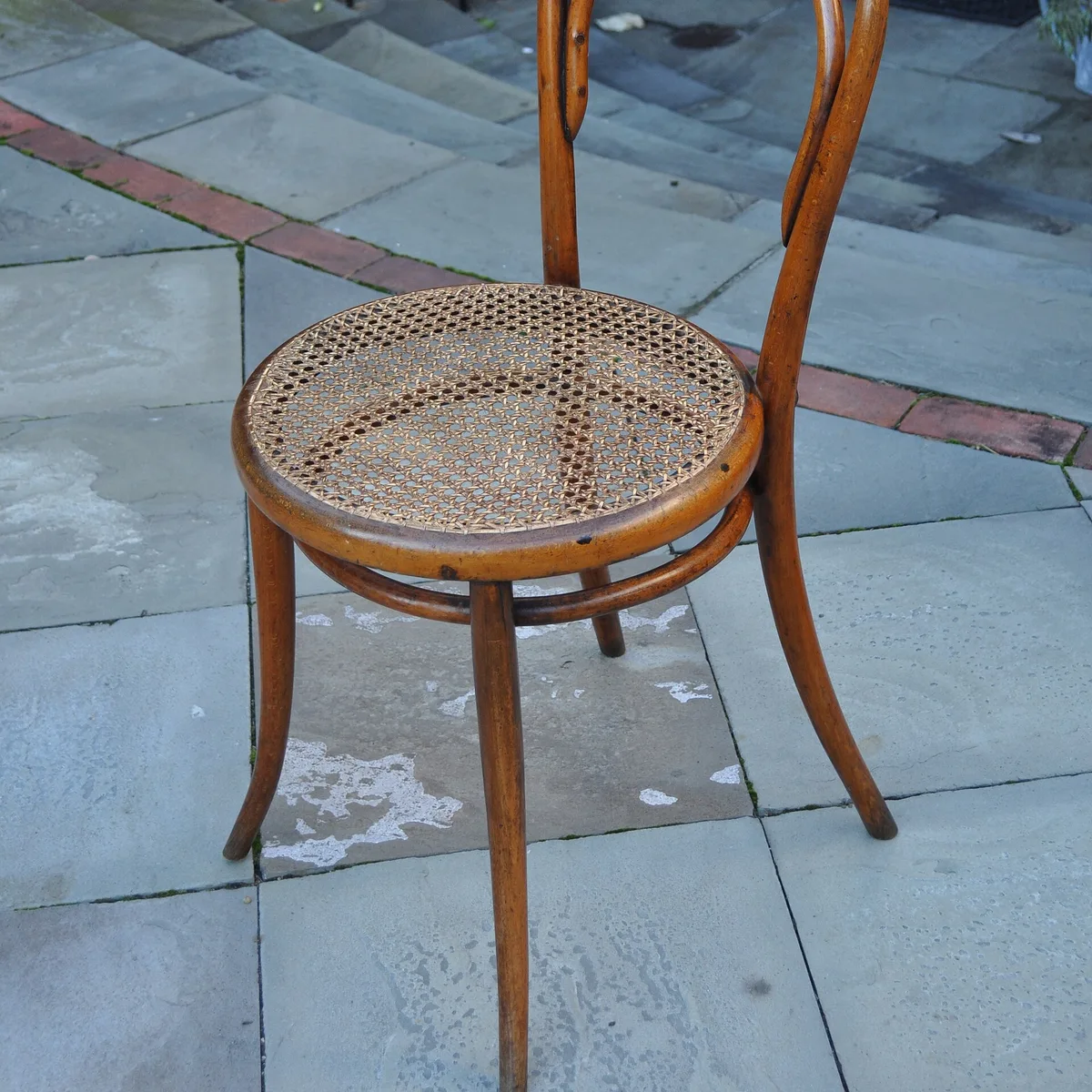
H.001 · 1859
Thonet No. 14
Bentwood as a system of serial production, reduced component count and packaging.
Historical sourceImage: Henry Townsend · Free Art License · File and licence
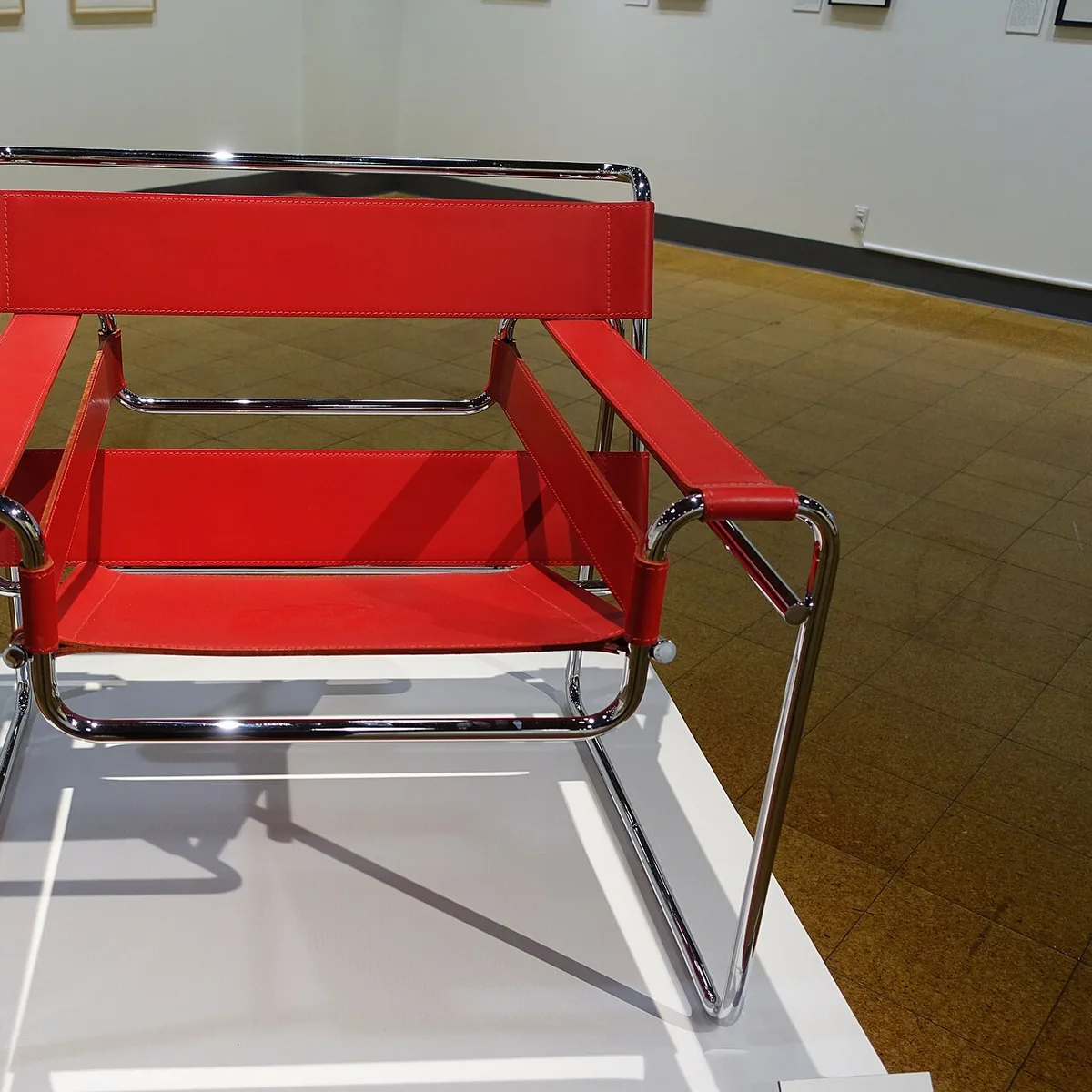
H.002 · 1925
Wassily / B3
Tubular sections shift the visual emphasis from mass to structural lines. The chair in the photograph is a reproduction.
Image: Daderot · CC0 1.0 · File and licence
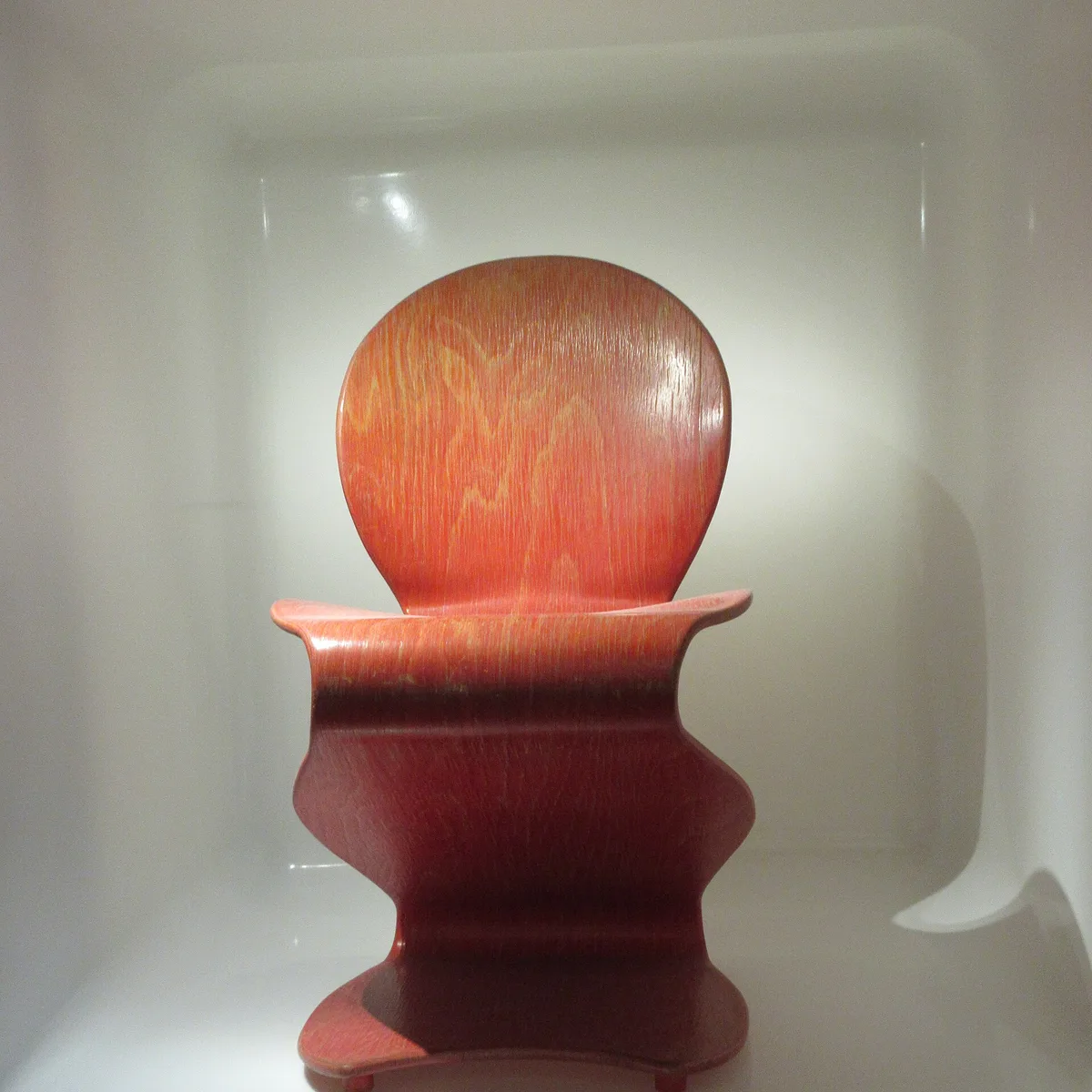
H.003 · 1960
Panton S Chair
The relationship between a continuous surface and plastics manufacturing. Museum photograph taken in 2018.
Historical sourceImage: Ramblersen2 · CC BY-SA 4.0 · File and licence

H.004 · 1965
Eclisse — Vico Magistretti
Physical control of light through nested simple surfaces.
Image: Camillo Frigeni, Luca Manenti, Francesco Massaro, Emanuele Michele Pinto · CC BY-SA 4.0 · File and licence
H.005 · 1972
Italy: The New Domestic Landscape
MoMA's 1972 exhibition is a historical reference for Italian design as an exploration of living patterns, not merely object shapes. It invites us to ask how FDM might change the relationship between user and producer as well as production costs.
Historical sourceH.006
Monobloc
Moulded plastic as an anonymous, widely distributed and economical object. What everyday typology might FDM make equally ubiquitous?
Historical source
03
Fields of research
01 / History
History of Making
How have new materials, machines and manufacturing methods shaped design throughout history? We examine the relationship between form and technology through historical objects, manufacturing archives and the work of designers.
02 / Material
Material Behaviour
We investigate how materials respond to light, temperature, force and geometry. Through experimentation, we explore how physical properties can become tools for design.
03 / Process
Machine Aesthetics
How do the movements, limitations and traces of a machine determine the appearance of an object? We examine layers, toolpaths and textures that emerge during manufacturing.
04 / Form
New Typologies
What new kinds of objects can emerge from new manufacturing methods? We look beyond established product categories to explore different forms, functions and relationships with users.
04
Research journal
For now this is a publishing plan, not finished work.
R.001 — History
When Plastic Changed Everything
How plastics manufacturing transformed twentieth-century design, and what that transformation might mean for additive manufacturing.
Next
R.002 — Process
The Visible Process
Manufacturing traces as part of an object's visual identity rather than imperfections to be concealed.
Planned
R.003 — Material
Light Through Matter
The effects of layer orientation, surface texture and material thickness on light transmission.
Planned
R.004 — Form
Objects Out of Context
The new meanings that everyday and industrial objects acquire when placed in different contexts.
Planned
R.005 — Process
The Continuous Line
The influence of continuous material extrusion on form, surface and manufacturing economy.
Planned
R.006 — Form
Beyond the Build Plate
Modular systems, joining methods and large-scale objects emerging from limited build volumes.
Planned
R.007 — History
Material as a Starting Point
Design approaches in which form develops through material properties and manufacturing behaviour rather than being predetermined.
Planned
R.008 — Material
The Architecture Within
The structural, optical and aesthetic potential of an object's hidden internal architecture.
Planned
R.009 — History
Who Gets to Make?
How open design, personal fabrication and access to manufacturing tools reshape the relationship between designer and user.
Planned
R.010 — Material
Geometry as Mechanism
Achieving movement and flexibility through material and geometry rather than separate mechanical components.
Planned
R.011 — Form
No Two Alike
Variation, parametric design and individualisation enabled by mould-free manufacturing.
Planned
R.012 — Process
The Productive Imperfection
The design potential of irregularities, controlled variations and unexpected outcomes that emerge during manufacturing.
Planned
05
Material studies
Manufacturing and material experiments conducted through physical samples.
Each study focuses on a specific variable. Materials, printing parameters, observations and outcomes are documented. Unsuccessful experiments are also part of the research.
MS.001
Layer Height
Planned
MS.002
Transmission
Planned
MS.003
Extrusion Width
Planned
MS.004
Density
Planned
MS.005
Connections
Planned
MS.006
Shadow
Planned
Documented in every study
Study ID · Research question · Material · Machine · Nozzle diameter · Layer height · Extrusion width · Print duration · Material consumption · Observations · Findings · Files
06
Reference library
An evolving collection of design archives, documentaries, books, patents and technical documents that inform our research.
Archives
Films
Reading
Documents
07
From research to objects
Some investigations result in material samples, others in prototypes. Some become the starting point for new products.
Here, we document the research, design decisions and manufacturing processes behind NOQ objects.
08
Method
01
Observe
02
Investigate
03
Experiment
04
Document
05
Make
We observe objects, manufacturing methods and materials. We examine historical sources, conduct physical experiments and document our findings.
The direction of our research is shaped by what we discover, rather than by a predetermined product.
NOQ.WORKS / An ongoing study